More than 40% of Togo’s GDP comes from agriculture, which also employs close to 65% of the country’s working population. Additionally, 60% of Togo’s territory—3.6 million hectares—is made up of agricultural land. 41%, or 1.4 million hectares, of this area, is planted with crops. The sector has a prominent role in the recently unveiled national development plan (under the second axis), which covers the years 2018 to 2022, in light of its importance.
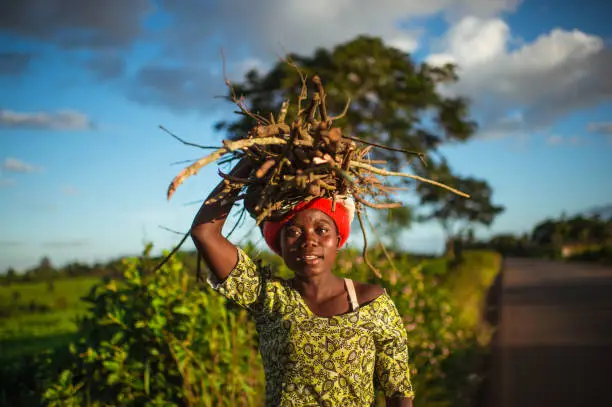
Although agriculture is a significant economic driver, only 2% of bank loans were made to this sector in 2019 and only 25% of farms received technical support for monitoring structures. Additionally, only 16% of farms use fertilizer, and 89% of cultivated areas still use antiquated machinery (hoe and cutlass). Additionally, yields vary widely by region, with the Savanes region—a zone subject to a decline in forested areas and land pressure—producing the least.
Togo’s soils are comparatively rich in nutrients (maize is grown on most of them). The Plateaux region is recognized for its fertile terrain, although Kara’s stony geomorphology makes it difficult to exploit the land there.
Green revolution
The nation has made numerous attempts to maintain its food security since 1975 when it launched its green revolution (a feat it has successfully achieved in recent years). According to this model, Togo saw a reduction in the prevalence of undernourishment from 16.5% in 2012 to 11.4% in 2014. The national program for agricultural investment and food security was responsible for achieving this (PNIASA).
Today and tomorrow
Numerous initiatives have been started to date to increase the nation’s agricultural output. The West Africa Agricultural Productivity Program (WAAPP-Togo), the Agriculture Support Project (PASA, which focuses on husbandry and the immunization of ruminants), the Hydro-agricultural Development of the Mono River’s Lower Valley (PBVM), and the Rice Production Development Project in Kara are among them (PDPR-K). Additionally, the Kara region is currently home to the agropole project.
A look at some agricultural products of Togo
Here’s an outlook on some of Togo’s agricultural produce.
Food crops
70% of Togo’s total agricultural production consists of food crops. Instead of being exported, they are largely intended for local consumption. However, given the ongoing domestic market demand, they provide farmers with significant and “secure” revenues. They primarily consist of grains and tubers. The first, grains, account for 56% of the calories in Togo’s diet from plant-based foods. Only the grains produced between 2014 and 2017 were made up of 51% corn, 20% rice, 17% sorghum, and 9% wheat. Cassava accounts for 61.8% of all tubers ingested, followed by yam (378.%).
Corn
It is grown by 1.5 million Togolese farmers on more than 700,000 hectares of land, or 40% of the country’s total agricultural acreage, spread over four agroecological zones. Since 1990, corn growing has continued to grow, particularly in the northern region. The amount of maize produced for the 2018–2019 growing season was 886,630 tons.
It is regarded as a cash crop in addition to being utilized for domestic consumption (both in rural and urban areas). According to the most recent data, corn is the second-largest source of revenue for farms, just after popular cash crops, with an average net income per hectare of XOF223,000.
Rice
The Savanes region is where rice is primarily farmed in Togo. Farmers suffer mostly against imports from Asia since farming is quite expensive. Numerous programs have lately been started to increase rice output, particularly in the Djagblé plain, to reverse this trend. Togo produced 145,000 tons of rice in 2018.
Sorghum and millet
Sorghum, the second-most produced crop, is widely planted on the farms of the Kara and Savanes areas. It is mostly used to make the regional beverage “tchoukoutchou.” It is frequently planted alongside millet. Millet is the least popular grain in Togo based on annual output. Sorghum and millet produced 303,000 tons of product together in 2018.
Tubers (yam and cassava)
Most yam is grown in Kpalimé and Bassar. It is mostly used to prepare “fufu,” a dish eaten in many West African nations. Togo’s yam production increased to 859,000 tons in 2018 from 78,100 tons in 2015.
You may also find these articles helpful
Business opportunities in Melanesia
Business opportunities in New Caledonia
Business opportunities in Tonga